
By the end of a busy day, your kitchen benchtop might have been a breakfast bar, a place to spread out a school project and the spot where you rolled out pastry. A sample tells you something about how the surface will look. The way you use your bench tells you what you’ll ask of it.
Start with an ordinary day at home. How quickly do spills get wiped up? Are you happy to see a surface change a little with use? Do you want a bench you can wipe down quickly after dinner? Bring those answers when you look at samples with your Mastercraft designer.
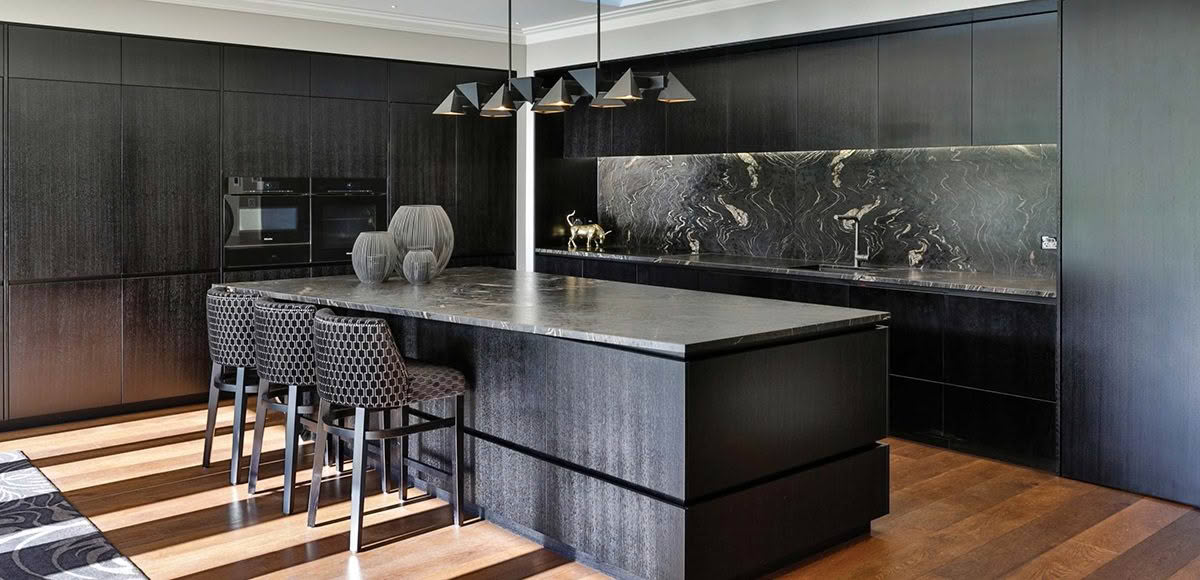
Meet the main benchtop materials
Use this comparison to narrow the options. Products and finishes within each family differ, so ask for the care instructions for the exact surface you’re considering.
| Material | What to look at in person |
|---|---|
| Laminate | A decorative surface bonded to a base, with many colours and patterns. Compare edge profiles, joins and sink details. Ask how to protect those areas from water left sitting. |
| Natural stone | Granite, marble and other stones vary from slab to slab. Ask whether the specific stone needs sealing and how it responds to acids. An acid mark on marble can be a change to the finish rather than a stain. |
| Engineered or composite surfaces | Products can differ in composition, pattern and care. Some look consistent across the bench. Others have strong veining. Check the exact product and what is currently available through your team. |
| Porcelain or sintered surfaces | Compare pattern, edge detailing and how corners will look. Ask the fabricator how the selected product handles cut-outs, exposed edges and the support needed for your layout. |
| Solid surface | Some systems suit integrated details and less visible joins. Ask to see a join in a similar colour and check which marks or damage a specialist may be able to repair. |
| Stainless steel | Some fabricated benches can incorporate a sink. Look at a used sample as well as a new one to see how fine scratches and marks develop on the finish. |
| Timber | The grain adds warmth and can change in appearance over time. Ask how to care for the finish around sinks and hot items, and whether it can be renewed. |
If you’re considering concrete, ask a specialist about appearance variation, support, sealing and care. It’s worth discussing how much variation in the finish you’d enjoy living with.
Match the care to your routine
Picture a keen baker who enjoys seeing a material age beside a busy household that prefers a quick wipe-down after meals. Both might like the same sample in the showroom and still end up choosing different surfaces. Bring an example of the sort of mark you would mind seeing after a few years.
When a product is described as stain-resistant or heat-resistant, ask what the care guide says about spills and hot cookware. A manufacturer’s resistance claim comes with conditions. Check which cleaners suit the finish, whether you should wipe up particular spills straight away and what to use under a hot pan. A chopping board and a trivet are simple habits to build into the plan.
Look closely at the joins and edges
Ask to see an actual edge and join. A small sample shows colour and texture, while a larger sample or full slab shows how a pattern changes across the surface. If the island has prominent veining, work through where it will run and how it might meet a join, an exposed end or a splashback.
Picture the edge from where you’ll usually see it, including while seated at an island. Ask how the finish looks in daylight and under your kitchen lights. Take neighbouring cabinet and splashback samples along so you can see them together. A more rounded or square edge can change the look even when the surface itself stays the same.
Before you decide, put the samples down where you would use the bench. Look at them in daylight and again after dark. Make a note beside each one about how the finish feels, how much pattern you’d like to see and which edge you prefer. If two samples look similar, ask to see them on a larger surface and to compare their care guides.
Settle the sink and cooktop before fabrication
Bring the exact sink, tap and cooktop models to your design meeting. Their openings, support requirements and how they meet the bench can affect which surfaces and edge details work. Mention accessories that need their own holes and anything you want to place close to a join. Ask how the team will confirm the final positions and when they’ll measure the room.
If you want seating at the island, show where people will sit and how you want to use that area. The material and cabinet layout help determine how the overhang can be supported. Your designer and fabricator can work through those details before the benchtop is made.
Compare the full installed cost
Ask what’s included in each option you’re considering. Material and thickness matter, along with what supports it, how many edges and openings need making, delivery access and fitting. A simple run and a large island with several cut-outs may ask different things of the same material. Check whether the price includes the pieces and work you’re expecting.
Ask about repair and upkeep while you’re comparing options. If a chip or mark would bother you, find out what can realistically be improved for that product and who would do it.
If you are changing the layout, tell the team about stairs, tight corners or narrow doorways on the way in. Access can affect which pieces can be delivered as planned and where a join is practical.
See some of the great companies we work with
At Mastercraft, we work with a nationwide network of trusted suppliers to bring you some of the best choices for your new kitchen. For benchtops, that means seeing how different materials look and work once they’re installed.
Here’s a closer look at two examples from Laminex and Archant. Use them to compare what matters on your bench, from the feel of the edge to where joins sit and how you’ll look after the surface.
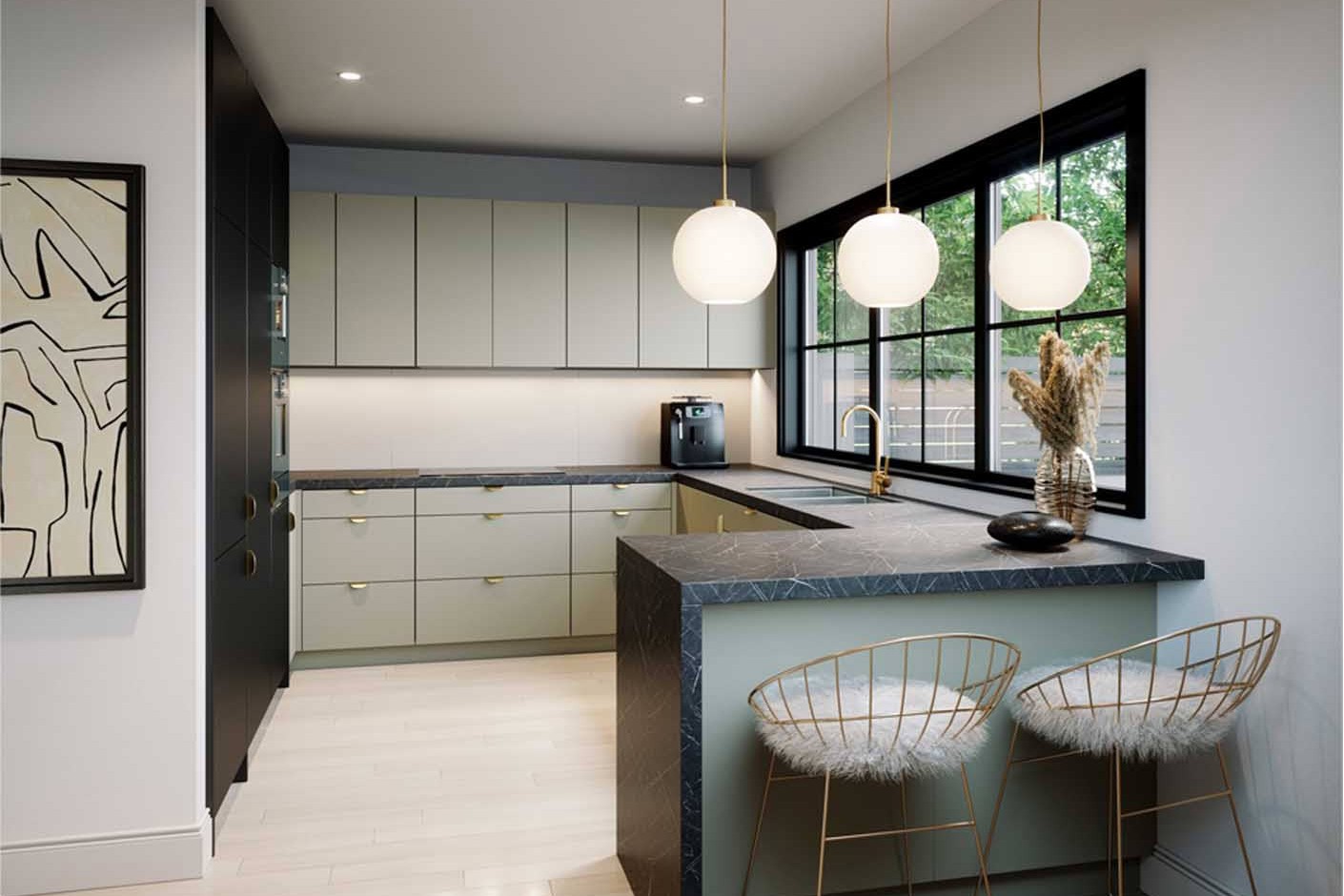
Laminex · Formica Nero Grafite laminate
Image: Laminex New Zealand
Laminex: compare the finish and the edge
Laminex’s gallery shows Formica Nero Grafite on a finished benchtop alongside Dawn Grey cabinetry. Ask for a sample you can see with your cabinet fronts and a finished edge you can feel. Have your designer show you how the join and sink edge would look on your layout, and check the care guide for the finish you choose.
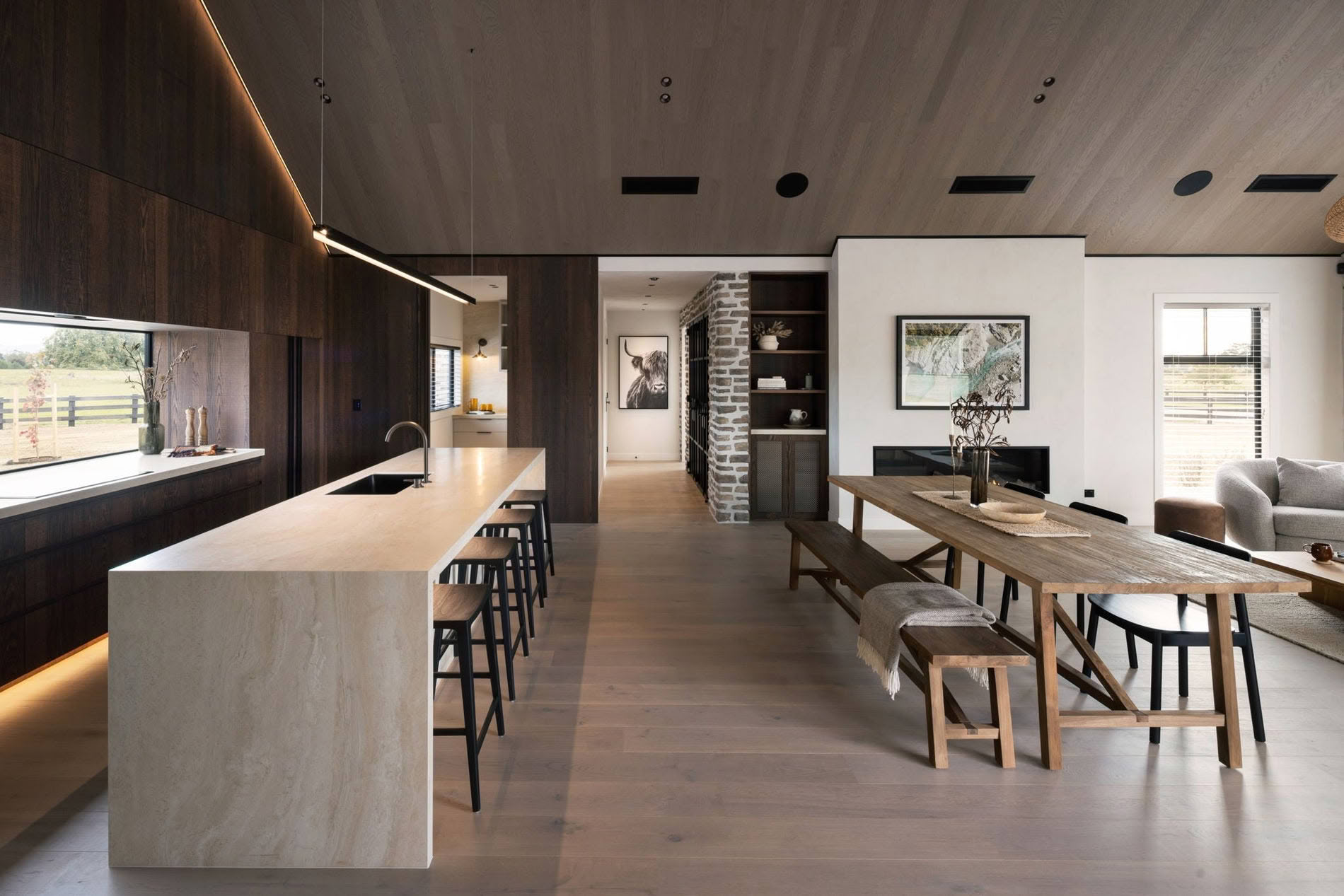
Archant · Florim Gold Travertine porcelain
Image: In House NZ via Archant’s Newell Road project
Archant: see how the slab pattern runs
The Newell Road kitchen uses Florim Gold Travertine porcelain on the island. If you like a surface with a visible pattern, ask to see a full slab and have your fabricator sketch where the pattern, joins and exposed edges would fall. Check the details around any sink or cooktop cut-outs before you settle on a slab.
Compare benchtop samples with your designer
When you meet with your local Mastercraft Kitchens team, your designer will show you benchtop samples in person and talk you through the materials that suit your kitchen and the way you use it. You can compare how the finishes look and feel, see examples of edges and joins, and ask what each surface needs for everyday care.
If a colour, finish or kitchen photo has caught your eye online, feel free to share it. You can also come in with an open mind and explore the options together.